Romantic Masterpieces That Immortalized Conway Twitty — A Journey Through Devotion, Heartbreak, Hope, and the Beauty of…
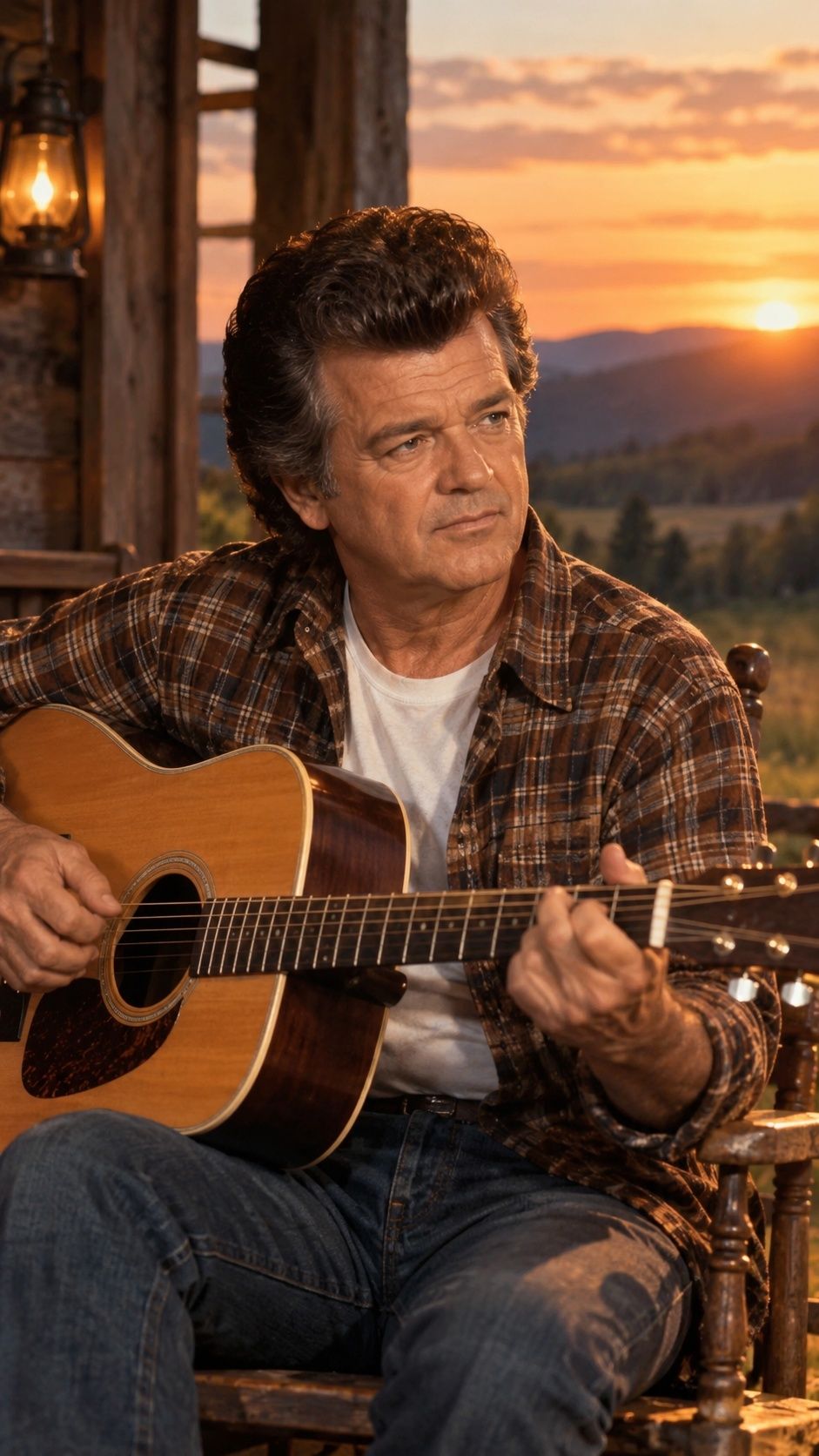
There are singers who perform love songs, and then there are singers who make you feel as though they have lived every word. Conway Twitty belonged to the second kind. His voice carried an unusual intimacy—a combination of confidence, vulnerability, longing, and quiet pain that could turn a simple country lyric into something deeply personal. Across decades of music, Twitty became one of country music’s most recognizable storytellers, particularly when he sang about the complicated territory of the heart.
His greatest romantic recordings were never simply about falling in love. They explored devotion that survives distance, heartbreak that refuses to disappear, desire that remains impossible to silence, and hope that somehow survives after everything seems lost. Whether he was singing to a lifelong partner, remembering a relationship that had slipped away, or confessing feelings that could no longer remain hidden, Twitty possessed a remarkable ability to make private emotions feel universal.
That is why his romantic masterpieces continue to resonate. They are not frozen relics of another era. They are emotional snapshots of the human experience—songs about wanting, losing, forgiving, remembering, and choosing to love again.
And somewhere inside those melodies, generations of listeners have found pieces of their own stories.
The Voice That Turned Romance Into Confession
What made Conway Twitty extraordinary was not merely the number of romantic songs he recorded, but the way he delivered them.
His voice could sound polished and commanding one moment, then unexpectedly fragile the next. That contrast became central to his romantic style. Instead of presenting love as something perfect and uncomplicated, Twitty often approached it as something vulnerable.
His performances had the feeling of a private conversation.
That quality can be heard throughout songs such as “Hello Darlin’”, perhaps one of the defining examples of his ability to transform a few simple words into an emotional event. The song does not need elaborate imagery to create its effect. Its power comes from the tension between tenderness and regret—the sensation of encountering someone from the past and suddenly realizing that old emotions have never completely disappeared.
Twitty understood that sometimes the most devastating romantic moments are quiet ones.
A voice can say more through hesitation than through shouting. A familiar phrase can carry years of memories. A melody can become the place where two people meet again, even after life has taken them in different directions.
That was one of Twitty’s great gifts.
Hello Darlin’ — The Sound of Love That Refuses to Die
Few recordings are more closely associated with Conway Twitty than “Hello Darlin’.”
The song became a defining part of his identity because it captures one of country music’s most enduring emotional situations: meeting someone you once loved and discovering that the past still has a heartbeat.
There is no grand romantic fantasy here. Instead, there is awkwardness, memory, restraint, and longing.
That makes the song powerful.
Twitty does not sound like someone delivering a rehearsed love speech. He sounds like someone standing face-to-face with history. The emotional force comes from what is left unsaid as much as what is spoken.
This became a recurring strength in his romantic catalog. Twitty understood that love stories rarely end neatly. Sometimes people separate without completely separating emotionally. Sometimes years pass, yet a familiar voice can reopen everything.
“Hello Darlin’” immortalized that contradiction.
Love can be over and still matter.
Love can hurt and still be beautiful.
Love can belong to the past and still live inside the present.
“You’ve Never Been This Far Before” — Desire, Vulnerability, and Emotional Tension
Another landmark in Twitty’s romantic catalog is “You’ve Never Been This Far Before.”
The song represents a different side of his artistry. While “Hello Darlin’” is steeped in memory and reconciliation, this recording explores anticipation and intimacy.
Twitty’s performance is deliberately restrained. Rather than relying on theatrical excess, he builds tension through his phrasing and controlled delivery.
That restraint is important.
Romantic music can easily become sentimental when the singer tells the listener exactly what to feel. Twitty often avoided that trap. He allowed the listener to enter the emotional situation themselves.
The result was a song that felt intensely personal without needing to explain every emotion.
It also demonstrated why Twitty became such an influential figure in country romance. He understood that intimacy is often created through atmosphere. A lowered voice, a pause, a carefully chosen phrase—these can create more emotional impact than an enormous vocal climax.
His romantic songs were frequently about the moment before certainty.
Before the promise.
Before the goodbye.
Before the heart finally understands what it wants.
“Linda on My Mind” — When Love Becomes an Impossible Choice
“Linda on My Mind” reveals another dimension of Twitty’s storytelling: romantic conflict.
Here, love is not simple happiness. It becomes a moral and emotional dilemma.
The protagonist is caught between relationships, responsibility, memory, and desire. That complexity is essential to the song’s impact. Rather than presenting romance as an uncomplicated escape, the story acknowledges that human beings can experience contradictory emotions simultaneously.
That is one reason Conway Twitty connected so strongly with country audiences.
Country music has always understood that love can coexist with regret.
You can care about someone and still hurt them.
You can make a commitment and still experience doubt.
You can know what you should do while feeling something completely different.
Twitty’s voice made those contradictions believable.
He did not need to portray love as morally perfect to portray it as emotionally real.
The Art of Heartbreak
If devotion was one of Twitty’s great subjects, heartbreak was another.
His catalog repeatedly returned to separation, loneliness, regret, and memories that refuse to fade. Yet even his saddest songs rarely feel emotionally empty.
There is usually a trace of tenderness beneath the pain.
That distinction matters.
For Twitty, heartbreak was not simply the absence of love. It was evidence that love had existed deeply enough to leave a scar.
This perspective helped define the emotional architecture of his music. His characters remember voices, places, conversations, promises, and moments. The past becomes almost another person in the room.
That is why listeners can return to these songs years later and suddenly feel transported.
A great country love song does not merely describe an emotion.
It preserves it.
Conway Twitty and the Beauty of Devotion
Not every romantic masterpiece in Twitty’s catalog depends upon heartbreak.
His music also celebrated commitment and enduring affection.
One of his greatest strengths was his ability to communicate the idea that love is not always dramatic. Sometimes it is simply choosing someone again and again.
That idea gave his romantic recordings warmth.
Behind the famous voice and glamorous career was an artist who understood the appeal of ordinary emotional truths: missing someone at the end of the day, wanting reassurance, remembering a shared past, or feeling grateful that another person remained beside you.
These emotions may seem simple.
But simplicity is difficult to sing convincingly.
Twitty could take an ordinary sentiment and make it feel monumental.
The Duets With Loretta Lynn
The romantic legacy of Conway Twitty cannot be discussed without recognizing his extraordinary partnership with Loretta Lynn.
Together, Twitty and Lynn created one of country music’s most celebrated duet partnerships. Their recordings worked because their voices seemed to inhabit different sides of the same emotional conversation.
Lynn could bring directness, strength, and vulnerability.
Twitty brought warmth, intensity, and controlled tenderness.
Their chemistry made songs such as “Louisiana Woman, Mississippi Man” and “After the Fire Is Gone” feel like miniature dramas.
They were not simply singing at one another.
They were responding.
That distinction transformed their duets into musical conversations about relationships, temptation, conflict, desire, and reconciliation.
Their partnership also demonstrated something fundamental about country romance: the most compelling love stories are rarely one-sided. They are dialogues.
Hope After Heartbreak
Perhaps the most enduring quality in Twitty’s romantic music is its belief that emotional life continues.
Even after betrayal.
Even after separation.
Even after regret.
Even after the final goodbye.
There is often a lingering sense that the human heart remains capable of loving.
That idea gives his music a surprisingly hopeful dimension.
Conway Twitty did not present romance as a perfect destination. He presented it as a journey filled with uncertainty. People make mistakes. Relationships change. Memories remain. Hearts break.
But people continue searching for connection.
That is where the beauty lies.
Why Conway Twitty’s Love Songs Still Matter
Decades after many of these recordings first reached audiences, Conway Twitty remains synonymous with a particular kind of country romance: intimate, dramatic, vulnerable, and unapologetically emotional.
His greatest romantic songs survive because they do not belong exclusively to the era in which they were recorded.
A young listener hearing “Hello Darlin’” can recognize the ache of unfinished feelings.
Someone who has experienced a difficult relationship can understand the conflict in “Linda on My Mind.”
Someone falling in love can hear the anticipation in “You’ve Never Been This Far Before.”
And someone who has spent decades with the same person can recognize the quieter beauty of devotion.
That is the mark of enduring songwriting and unforgettable performance.
The world around the songs changes.
The emotions do not.
The Legacy of a Romantic Storyteller
Conway Twitty left behind much more than a collection of hit records. He left behind an emotional vocabulary for generations of country listeners.
He sang about love when it was exciting.
He sang about love when it was complicated.
He sang about love when it was forbidden.
He sang about love when it was remembered.
And he sang about love when all that remained was hope.
His voice became the narrator for countless private moments—late-night drives, lonely bedrooms, wedding anniversaries, painful breakups, reconciliations, and memories of people who could never quite be forgotten.
That is why his romantic masterpieces feel immortal.
They are not perfect stories.
They are human stories.
And perhaps that is the secret of Conway Twitty’s enduring appeal. He understood that the most beautiful love songs are not necessarily the ones where everything works out.
Sometimes the most unforgettable songs are about the love that almost survived.
The love that changed us.
The love we lost.
The love we remembered.
And the love we were brave enough to feel again.
In the end, Twitty’s greatest romantic legacy is beautifully simple: loving someone is never merely about possessing a happy ending. It is about allowing another human being to leave an unforgettable mark on your heart.
And few voices in country music ever made that truth sound more beautiful.